








A first-of-its-kind artificial vision system has successfully been implanted, providing the possibility of restoring partial vision to people with sight loss due to eye disease or trauma.
The Intracortical Visual Prosthesis (ICVP) implant bypasses the retina and optic nerve to connect directly to the brain’s visual cortex. It is the culmination of nearly three decades of research conducted by a multi-disciplinary team led by Professor Philip Troyk, director of the Pritzker Institute of Biomedical Science and Engineering at Illinois Institute of Technology.
It is the first intracortical visual implant to use a group of 25 fully implanted miniaturised wireless stimulators to explore whether non-sighted individuals can utilise the artificial vision provided by this approach, said Prof Troyk. “This is an incredibly exciting moment, not just for the field of biomedical engineering, but more importantly for people with blindness and their loved ones around the world.”
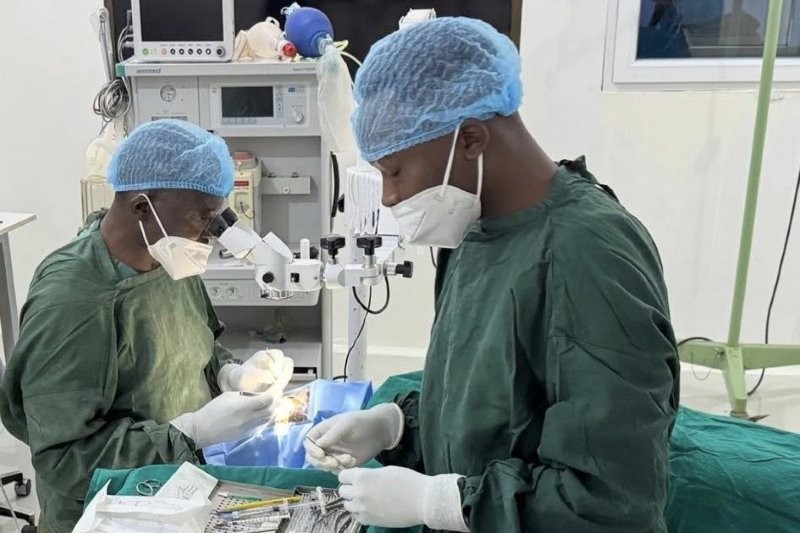
The ICVP system was successfully surgically implanted at the Rush University Medical Center in Chicago in February as part of a phase 1 feasibility study. “This operation represents a critical step in the decades of research by our whole ICVP team in our efforts to bring sight to blind patients,” said Dr Richard Byrne, the neurosurgeon at Rush University Medical Centre who performed the surgery.
Testing whether the prosthesis will provide the study participant with an improved ability to navigate and perform basic, visually guided tasks will commence at The Chicago Lighthouse after a four- to six-week recovery period.