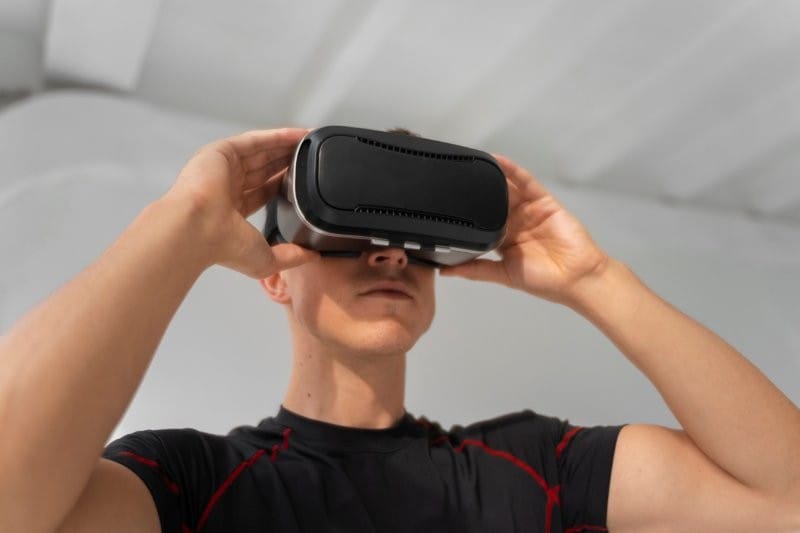
A Japanese study found that short-term virtual-reality (VR) headset use increased tear-film lipid-layer thickness in healthy adults.
Writing in Nature Scientific Reports, researchers from Waseda University and Kyoto Prefectural University of Medicine described using a non-invasive camera system to measure real-time tear-film dynamics during VR gaming. Fourteen participants (mean age 29.8 years, five women, with individuals with a history of ocular surgery or dry eye disease excluded) underwent baseline assessment followed by 30 minutes of uninterrupted headset use, with measurements taken every five minutes. The team evaluated lipid-layer interference grade, lipid-spread behaviour, lipid-spread time, maximum blink interval, tear-meniscus height (TMH) and subjective dry-eye symptoms.
Participants’ mean interference grade rose significantly after 20 minutes, indicating a thicker lipid layer, while researchers noted temperature increases, including a rise of 1.5°C at the corneal surface. No significant changes were observed in lipid-spread grade, blink interval, TMH or dry-eye symptoms.
“These findings suggest that VR headset use may enhance tear film stability by promoting lipid layer thickening through a localised periocular temperature rise,” said researchers. They noted their findings reflect short-term effects in healthy users, with further work needed to determine whether similar changes occur in people with dry eye or meibomian-gland dysfunction.