







The Royal Australian and New Zealand College of Ophthalmology (RANZCO) NZ Annual Scientific Meeting 2026 is offering an exciting scientific programme featuring local and international experts in their field. From passionate firework ban campaigner to newly published author; here is a quickfire Q&A with this year’s international keynotes:
Dr Jan-Tjeerd de Faber (Netherlands)
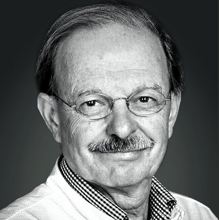
Paediatric ophthalmologist Dr Jan-Tjeerd de Faber specialises in cataract, strabismus and the treatment of eye injuries, including those caused by fireworks. Having studied psychology and medicine at the Netherlands’ Radboud University and Erasmus University, he completed training in general practice, tropical medicine and a post-doctoral fellowship in visual sciences at the University of Texas, Houston. After completing his ophthalmology residency in Rotterdam and a paediatric ophthalmology fellowship at Baylor College of Medicine, Houston, Texas, Dr de Faber became head of paediatric ophthalmology and strabismus at the Rotterdam Eye Hospital.
Dr de Faber said he finds the interaction with children incredibly rewarding and full of humour. “I somehow developed antennas and skills to diagnose and treat eye diseases in this difficult age group. The interaction with worried parents is also very important because paediatric ophthalmology is 50% ‘parentology’. In our own family, we suffered a firstborn with physical handicaps and our second child died of sudden infant death syndrome, so I know how anxious and worried parents can be when something might be wrong with their child. It’s important to always be positive, count the blessings of a child and choose harmony over conflict.”
Career highlight
The Netherlands has recently imposed a ban on the sale of fireworks to the public, joining Ireland as the second European nation to do so. Dr de Faber was part of the team that campaigned for this ban for decades. “The fact that the Dutch parliament and senate voted for a ban on consumer fireworks is the crown on my career because it will save eyes even after I’m retired or dead.”
It took more than 25 years to convince politicians that a ban was necessary, he said. “Expressing the voice of a vast majority of our population, perseverance was important while also supporting our case with data. Ultimately, the tipping point came when police, firefighters and ambulance workers suffered injuries due to aggression during New Year’s celebrations. That argument pushed the right-wing parties of ‘law and order’ on board to vote for a ban.”
Dr de Faber also serves as consultant ophthalmologist at Rotterdam Zoo, a role that frequently features in his clinical and teaching work. Dr de Faber said he got the role thanks to his skills in dealing with preverbal patients. “The fact that I operated on monkeys before I started my residency in ophthalmology made me the best candidate,” he joked. During his time there, he has treated more than 40 species. One highlight was treating two baby gorillas with early cataracts, he said. “Hence, the lecture title: ‘Gorillas out of the mist’. The strangest case was surgery on a cod fish. Videos of these surgeries will be shown in one of my lectures.”
Professor Carol Karp (US)
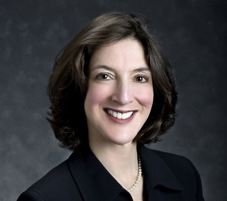
An ocular surface oncology specialist, Dr Carol Karp, professor of ophthalmology and the Richard K. Forster Chair in Ophthalmology at the Bascom Palmer Eye Institute in Miami, Florida, is recognised as a trailblazer within her field. Having completed her ophthalmology residency training at the Kellogg Eye Centre at the University of Michigan, she did a fellowship in cornea and external diseases at Bascom Palmer before joining the US’ premier-ranked eye hospital in 1994. At Bascom Palmer, Prof Karp has pioneered the use of interferon for the treatment of ocular surface squamous neoplasia and the use of ultra-high-resolution OCT as an ‘optical biopsy’ in the condition’s diagnosis.
Among her significant recognitions, Prof Karp was named one of America’s best eye doctors by Newsweek in August 2021; she was also a top 100 woman in ophthalmology on The Ophthalmologist’s 2021 Power List and was on its 2019 Power List as one of the top 50 most influential ophthalmologists. In addition, she was given the 2019 Shaler Richardson, MD, Service to Medicine Award from the Florida Society of Ophthalmology for greatest personal contribution to quality ophthalmic patient care and was honoured with the Senior Achievement Award and the Secretariat Award from the American Academy of Ophthalmology (AAO) for her accomplishments and service to the AAO. She also received the Mentorship Award from Women in Ophthalmology and the American Medical Association Women Physicians Sector in 2013.
As an ocular surface oncologist, Prof Karp said she has the “profound privilege of curing cancer while restoring sight and preserving life”. Vision is such a precious sense, she said. “It shapes how we connect with the world and the people we love, so helping patients regain their sight and their quality of life is both humbling and incredibly fulfilling.” Looking ahead, she said she is very excited about emerging non-invasive approaches to diagnose and treat ocular surface tumours.
In her day-to-day life, Prof Karp juggles many roles: physician, mother, wife, mentor, teacher and scientist. Delivering in this high-pressure environment, she said she’s learnt that resilience comes from being fully present in each role. “When I focus completely on the task at hand and give it my full effort, I find clarity and strength, even in high-pressure moments.”
Outside of work, Prof Karp is an avid baker. “My kitchen is my science laboratory, where I create chocolate brownies, cakes, fresh breads and more. Sharing them with friends and colleagues and seeing their joy brings me so much happiness. I’m also devoted to my morning exercise routine, especially swimming. It’s my time to think, recharge and strengthen both body and mind.”
Dr John Ellis (UK)
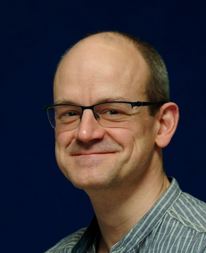
Dr John Ellis specialises in cataract surgery and has a strong background in retinal disease and service innovation. He has worked at NHS Tayside for over 20 years and leads the Cataract Service Redesign Programme at Ninewells Hospital in Dundee.
Since 2022, Dr Ellis has led major innovations in cataract services, including the introduction of digital referral pathways and digital consent, significantly reducing wait times from optometry referral to specialist assessment. He has also been instrumental in developing high-volume cataract surgery models – including same-day bilateral cataract surgery, where appropriate – improving access while maintaining excellent safety standards.
Initially starting out in engineering, Dr Ellis told podcaster Jonathan Winter on The Innovator’s Journey that he always enjoyed working with his hands, which lent itself nicely to surgery. “I fell in love with the finesse of ophthalmology, its microscopic nature, and the tiny scale of things was hugely attractive to me.” Another highlight is the freedom to innovate, he said.
While cataract surgery is life-changing and a phenomenal intervention, the problem is how to get patients through the door fast enough, he said, in regard to the Dundee programme’s success. “Historically, operating lists have been quite slow in dealing with the number of patients we need to address,” he said. “In the UK, we took the view that the most important aspect of productivity is in the nursing team. Using Lean Six Sigma analysis, the team found seven nursing suggestions for changing details in the process.” A key critical success factor was team buy in, Dr Ellis said. “Now, we’re more busy but less tired.”
While the Royal College of Ophthalmologists’ cataract standards suggest an average of one case per 30 minutes (16 per eight-hour day), the Dundee team’s average is now 26 cases per day, using a single theatre and a single surgeon, he said.
Nurses keynote – Dr Heather Machin (AU)
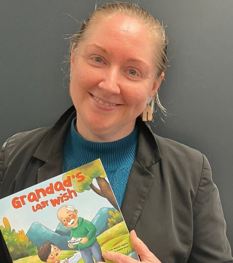
Melbourne-based ophthalmic nurse Dr Heather Machin is the head of the Lions Eye Donation Service. She also manages the Centre for Eye Research Australia Biobank and leads the Hygelix and BIENCO projects (the former being a hydrogel scaffold to help a donated cornea ‘unscroll’ when inserted into the recipient eye; the latter being a consortium to develop a bioengineered cornea). In addition, Dr Machin conducts her own research in eye banking and nurse workforce development.
Dr Machin led the development of national and global bioethical tissue frameworks, including the development of The Barcelona Principles. She has worked in over 30 countries, previously with Orbis International’s Flying Eye Hospital and as a consultant to the Fred Hollows Foundation NZ working in the Pacific Islands. She has held nurse director positions in Australia and overseas, is the president of the Australian Ophthalmic Nurses Association (AONA), co-developer of the Australian Ophthalmic Nursing Standards and is a nurse mentor through the Australian College of Nursing.
Dr Machin said she loves nursing as it’s a purpose-driven profession with real-world impact. Working with tissues interests her as it involves a wide range of areas including clinical, medical science, bioethics, sustainability and population health, manufacturing, regulations, biobanking and research. “It also brings peace to donors and their families at the end of their life and improves the lives of others through its allocation to transplantation, training and research.”
Recently, Dr Machin added published author to her many achievements, with the release of children’s book Grandad’s Last Wish. Dr Machin said she was inspired to write the story because of her experience working both as an eye nurse in operating theatres and as the head of the Eye Bank in Melbourne. She hopes her book will help break down barriers to eye donation. “I hope it inspires people to consider becoming an eye donor and really consider the impact of what that gift can achieve.”