






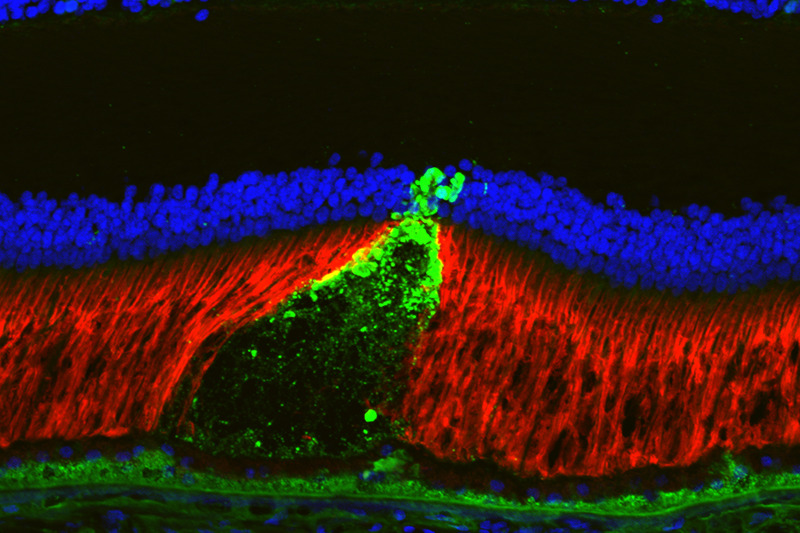
Authors of an international study identified a distinct genetic signature underpinning reticular pseudodrusen, a high-risk subtype of age-related macular degeneration (AMD), which they said reinforces the evidence that AMD is not a single disease and may require subtype-specific treatments.
US and Australian researchers analysed genetic data of three groups patients: those with AMD and reticular pseudodrusen, those with AMD without reticular pseudodrusen, plus controls. Writing in Investigative Ophthalmology & Visual Science, the team reported that while both AMD groups shared common risk variants on chromosome 1, which is linked to the complement pathway, only the reticular pseudodrusen group showed a strong association with chromosome 10 variants.
Since reticular pseudodrusen appear to be driven by non-complement pathways, these results could help explain why drugs targeting just the complement pathway have shown minimal effect in slowing geographic atrophy, said co-author Dr Anand Swaroop, chief of the Neurobiology, Neurodegeneration and Repair Laboratory at NIH’s National Eye Institute (NEI). “It’s clear that AMD involves multiple pathways that differentially synergise to generate distinct phenotypes.” The authors concluded that recognising genetic and biological differences between AMD subtypes will be critical in developing more effective, targeted therapies.