







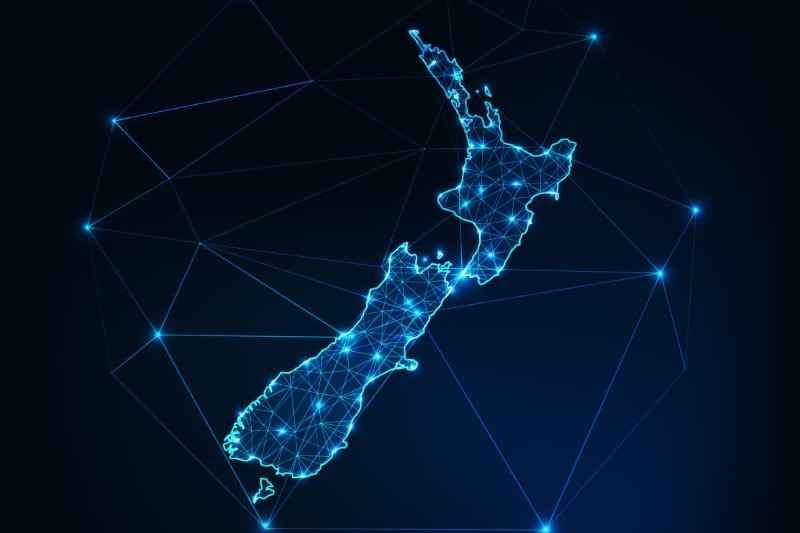
As much as I love what we have here in New Zealand, when I get to be on the other side of the world I always look with envy at what they have there. It’s amazing how much more you can do when you have enough people. You notice it in all kinds of ways, large and small. A good restaurant can sustain itself just on foot traffic. A theatre company can tour regional towns and still pay its artists properly. A manufacturer with an interesting idea can begin with a local market large enough to let them grow at a natural pace. It's not that those things aren't possible here, but the economics are tighter, the risks are bigger, and the margin between success and failure narrows considerably when your potential customer base is five million people spread across a pair of islands at the bottom of the world.
So when I'm looking with that envy, I'm also often thinking: what if we approached population growth differently? What if, instead of something that happens to us, we treated it as part of a deliberate, determined, well-conceived and sustainable plan? To be fair, we've had a run or two at this already, backwards, with our eyes closed. We've opened the doors without doing the thinking, without building the infrastructure to match. The result has been housing shortages, stretched services, cities that haven't had time to plan for themselves.
But that's not an argument against growth. It's an argument for doing it properly, and we haven't really yet tried that. What if we set ourselves the ambitious goal of growing from five million to 25 million people? Carefully, sustainably and over decades, I hasten to add, but yes, we end up at 25 million. I’m imagining towns and cities across Aotearoa with a wind behind their back of genuine investment and real purpose. We'd be welcoming people with skills, of course, but we'd also be open to the kinds of people who've always made places work; people who arrive with little and build something, who bring energy and ideas and willingness to try things.
But what matters most becomes possible when you grow from five million to 25 million people. At that greater scale, entire categories of things become viable. We could have a genuinely diversified economy that no longer rests on the fortunes of agriculture and tourism. I'm imagining all the transformation and expansion: making more things, exporting more, building industries with real depth and sophistication. We finally have the kind of economy we've always said we wanted. To make this work, we'd also need to lift our game on infrastructure. I'm imagining a state-run home-building programme, designed around social return rather than fiscal return, which ensures housing gets built at pace and stays affordable, so our cities don't simply become vehicles for property speculation. I'm also imagining a 21st century Ministry of Works. I propose all this because I doubt markets alone could deliver what I’m describing at the scale and cost-effectiveness we'd need.
And undergirding all of this, we'd be making the most of abundant, clean energy, where we enjoy huge advantages: offshore wind, tidal power, solar, geothermal. Why not make the most of what we have? Why not make the most of the falling cost of renewable energy? Why not make the most of 21st century energy?
I know this sounds ambitious. I know this will make people hugely uneasy about what it might do to our serene and unspoiled back country and coastline. Firstly, I would stress that this would be a very careful and staged plan that spans decades. And, secondly, imagine what it might give us: a country where more people have more opportunities; where ideas can find markets large enough to flourish; where there's genuine diversity in how the economy works. Imagine not being constantly constrained by being small.
What could New Zealand become if we get it right? We could be the envy of the world.
David Slack is an Auckland-based author, radio and TV commentator, speech writer and regular contributor to NZ Optics.