









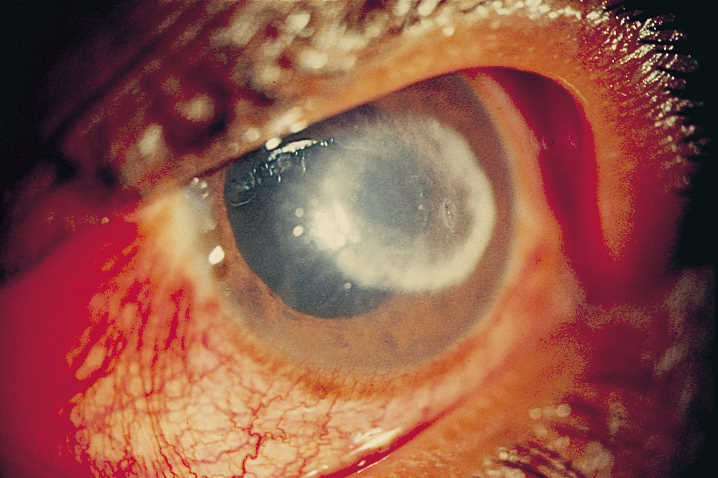
A team from the Indian Institute of Technology Delhi has developed a topical treatment for mycotic keratitis with five times the corneal penetration of standard natamycin (pimaricin) treatment.
Natamycin is the primary line of treatment for fungal keratitis but offers poor ocular penetration and requires prolonged and frequent dosing, causing patient discomfort, said study lead Professor Archana Chugh.
In the study, published in the International Journal of Pharmaceutics, the research team in collaboration with Mumbai-based cornea specialist Dr Sushmita Shah, conjugated the cell-penetrating peptide (CPP) Tat2 with natamycin to create what they term Tat2natamycin. In rabbit models, Tat2natamycin demonstrated five times the ocular penetration of natamycin; while in mice, the team reported a 44% resolution of mycotic keratitis in those treated with the conjugate compared with 13% in natamycin-treated subjects.
According to another study, published in The Lancet in 2020 by Lottie Brown et al, fungal keratitis affects around 1 million people annually, 8-11% of whom will lose an eye as a result. The highest annual incidence per 100,000 people is reported in Southern Asia, with India’s large farming population particularly prone due to handling fungus-infected vegetable matter.
Prof Chugh said, “A few hurdles persist for us before this novel conjugate can enter clinics and be useful to patients. With promising results obtained in the animal studies, we are hopeful that the biopharma industry will come forward for its clinical trials.”